

Some children jump into a playgroup without hesitation. Others cling to your leg, carefully sizing up the room.
Some brush off a scraped knee. Others feel the sting all afternoon.
It’s not random. Neuroscience shows these differences are part of a developmental chain that begins at birth and shapes the social and emotional skills children use for life.
This two-part article is part of our Insights from Neuroscience series. It explains how children’s brains build social and emotional foundations, from birth to early twenties. It’s based on the book “Welcome to Your Child’s Brain: How the Mind Grows from Conception to College” by Sandra Aamodt and Sam Wang. We will cover:
Temperament: Your child’s starting blueprint, the inborn design that shapes how they react to the world.
Emotions: The weather in the house, sunny or stormy, the shifting climate of feelings that moves through that blueprint every day.
Empathy & Theory of Mind: The windows and doorways, openings that let your child see the world from another’s perspective and connect with people beyond their own walls.
Playing Nicely with Others: The neighborhood, the larger social world where different “houses” interact, cooperate, and learn to live together.
In this Part 1, we go through how temperament and emotions work together to influence behavior from birth to the twenties, and what you can do to help your child build self-control, resilience, and confidence.
In Part 2, we’ll continue exploring how this foundation supports empathy, perspective-taking, and the social skills children need to connect, cooperate, and thrive.
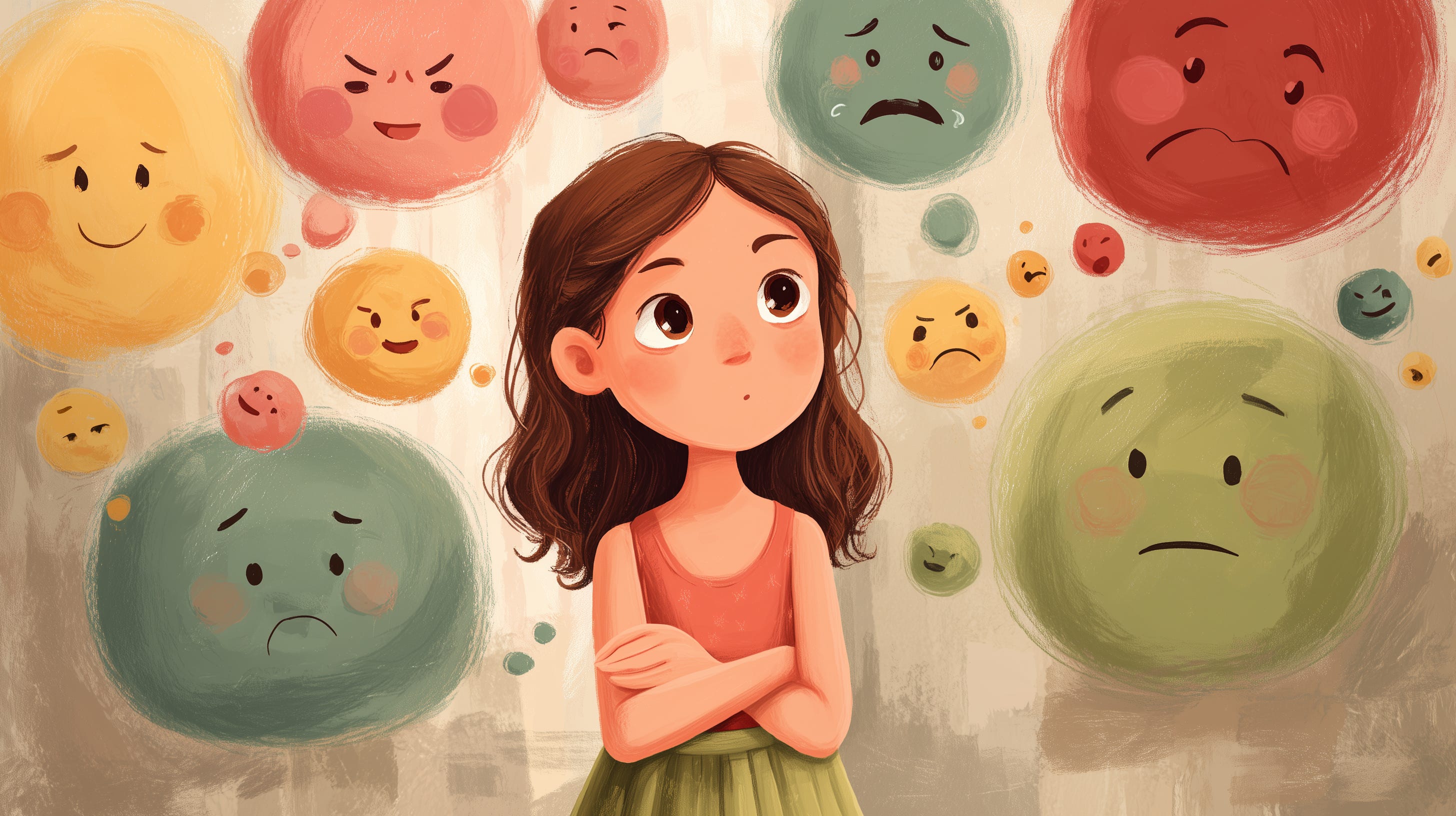
1. Temperament: Your Child’s Starting Blueprint
If you’ve ever compared baby notes with another parent, you know the truth: some kids are born mellow, others are born with a megaphone.
That’s temperament, the built-in blueprint that shapes how your child reacts to the world. It’s not good or bad, just the raw material they’ll build on for life.
1.1. Not a Blank Slate
Many new parents start out believing babies are blank slates — that with the right guidance, any child can be molded into any kind of person.
But the reality is: from day one, babies differ in profound ways.
One baby sleeps through every noise in the maternity ward; another startles at the sound of a zipper.
One treats strangers like old friends; another buries their head in your shoulder.
One is fascinated by every new food; another cries if the yogurt comes in a different cup.
Liberal parents ban toy guns, only to find their son waging stick battles in the backyard.
Those differences aren’t quirks to iron out. They’re the blueprint your child will build on. The more we understand that blueprint, the better we can create the environments, routines, and relationships that help our kids grow into the strongest versions of themselves.
1.2. What Temperament Is
Temperament is the set of biologically rooted traits that influence your child’s activity level, attention span, adaptability, and emotional reactivity.
These traits:
Appear early: even newborns differ in how much they squirm, cry, or stare.
Are partly inherited: identical twins are more alike in temperament than fraternal twins.
Tend to be stable: the shy baby often grows into the reserved adult, though experience can nudge the trajectory.
1.3. High-Reactive vs. Low-Reactive
One of the clearest early differences is reactivity: how strongly a baby responds to something new.
High-reactive: cry or flail at unfamiliar sounds, faces, or toys. As they grow, they’re more likely to be cautious, shy, or anxious, but also sensitive, observant, and thoughtful.
Low-reactive: stay calm when something novel happens. More likely to be outgoing and adventurous, but sometimes impulsive or risk-prone.
Neither type is “better.” They simply come with different strengths and challenges.
1.4. Nature, Nurture, and Their Dance
Think of temperament as your child’s blueprint: genes draw the outline, but experience fills in the details and decorates the rooms.
You can’t tear down and rebuild the structure, but you can choose which windows to open, which walls to reinforce, and which spaces to make cozier.
Importantly, children also help shape their own environments: the fearless toddler heads for the tallest slide, the cautious one sticks to the sandbox.
1.5. Gene–Environment Interactions
The same environment can affect children differently depending on their blueprint.
A calm, structured classroom might help a high-reactive child feel safe and flourish, but leave a low-reactive child bored and restless. Likewise, harsh parenting can harm sensitive children more deeply, while warmth and encouragement can bring out their best.
Sometimes the interaction forms a feedback loop:
An irritable or aggressive child may provoke harsher discipline, which increases aggression until it’s hard to manage.
Reducing parental harshness can lower the risk of long-term aggression.
And not all influences are at home. Peers, teachers, and the wider community shape behavior, from accents to attitudes, often as much as parents do. Culture adds another layer: in Asia, shyness may be praised as maturity; in Western world, the same trait might be seen as something to “overcome.”
This is why “one-size-fits-all” parenting advice often fails. Your child’s blueprint changes the game, and so does the world they grow up in. Even with the same child, the approach that works at age three may need adjusting at age thirteen.
1.6. Myth-Busting: Birth Order
The “firstborn leader, youngest free spirit” story makes for fun conversation, but research shows that, once you account for family size and background, birth order has little lasting effect on personality. Temperament is a much better predictor of behavior.
1.7. What Parents Can Do
Genes set the blueprint, but parents help decide how it’s built into a life. Four powerful levers:
Build a strong relationship: Your connection is a lifelong asset. The warmth and trust you build now will influence how you relate even when they’re grown.
Create a supportive home environment: Clear, fair boundaries help children feel secure. Rules matter, but so does how they’re enforced.
Teach life skills: From cooking to budgeting to fixing a flat tire, practical skills build confidence and independence. Exposure to new activities helps uncover hidden passions.
Coach them to work with their temperament: For a cautious child, try gentle exposure to new experiences. For an impulsive one, practice pause-and-plan strategies before acting.
1.8. Takeaway
Temperament is your child’s blueprint. You can’t replace it, but you can upgrade the design, reinforce the structure, and help them use it well.
Recognizing that blueprint helps you:
Understand their triggers and comforts.
Choose environments that set them up for success.
Avoid unnecessary battles to “change” who they are.
2. The Emotional Brain in Action
If the blueprint is your child’s structural design, emotions are the weather in the house — the shifting climate they live in every day. The blueprint influences how that weather feels inside: a sturdy design might handle storms with ease, while a more fragile one may sway or leak in strong winds.
If you’ve ever wondered why life with a toddler feels like a rollercoaster, here’s the neuroscience: the parts of the brain that trigger raw emotions mature earlier than the brain regions that control and regulate them. In other words, the “go” button comes online long before the “brake.” That imbalance drives much of what you see in children’s early years. And development continues into the early twenties. Understanding the weather in the house is the first step to helping children learn how to live with it, manage it, and sometimes even change it.
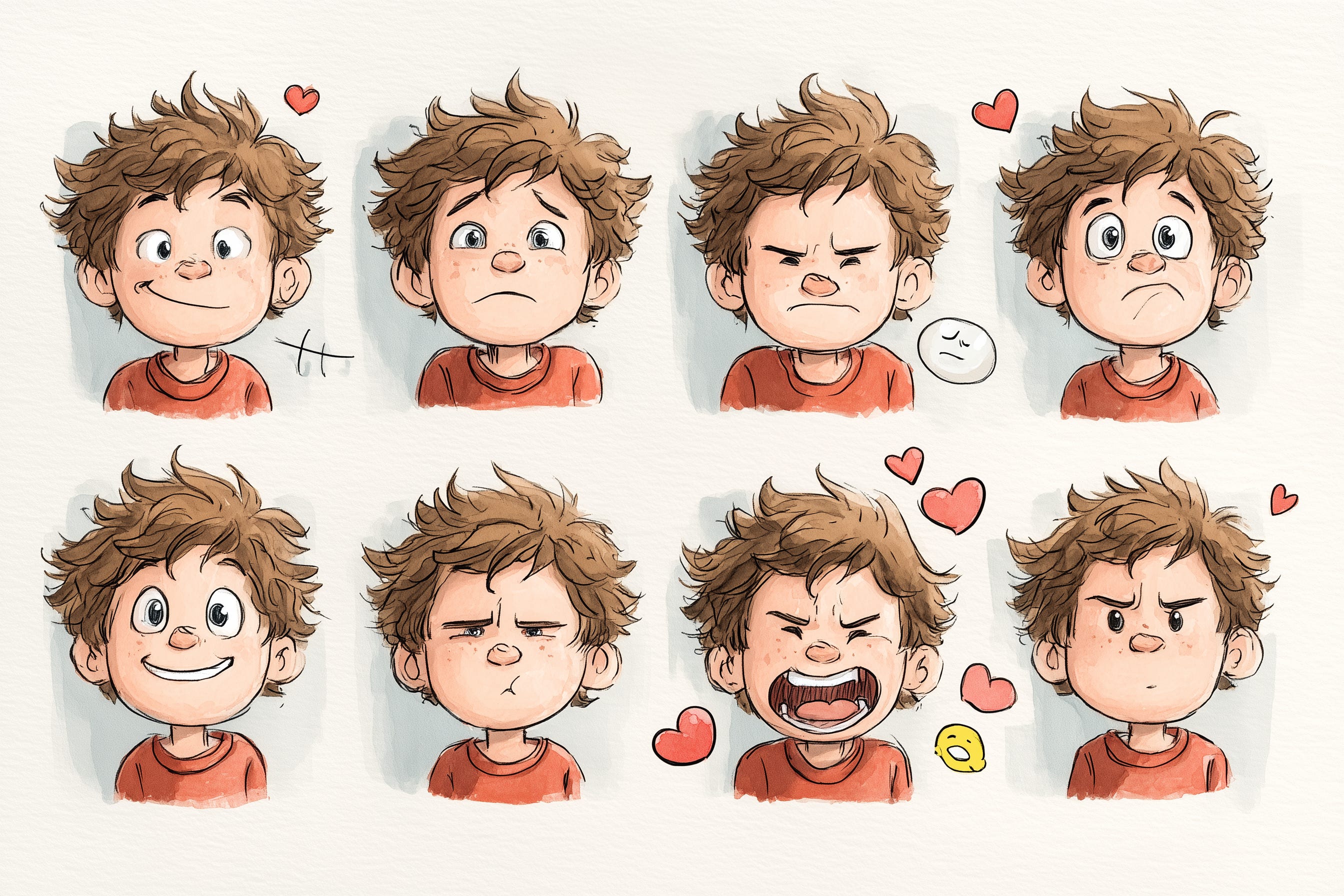
2.1. Emotions: Nature’s Fast-Acting Survival Tools
From birth, emotions help your child respond to the world. They act as rapid, automatic systems that:
Distinguish between what’s rewarding and what’s threatening.
Direct attention to important events.
Prepare the body for action.
Communicate inner states to others.
Some emotions — fear, joy, disgust, surprise, sadness, interest — are universal across cultures, with built-in facial expressions. This is why you can recognize joy or fear on the face of someone from anywhere in the world, even without shared language or experience.
In our metaphor, these emotional surges are like sudden gusts, warm sunshine, or passing storms. They are the moment-to-moment changes of the weather in the house.
2.2. The Brain’s Emotional Hubs
Emotions aren’t produced by one “emotional center,” but by a network of brain regions that work together:
Amygdala: Acts as the brain’s rapid-response alarm system, detecting emotional significance in sights, sounds, and events. It prioritizes speed over accuracy. If you see a curved stick, it may trigger a jump before your cortex confirms it’s not a snake.
Prefrontal Cortex: The “control panel” for interpreting, regulating, and integrating emotions into decision-making. It helps shift from impulsive reactions to considered responses. It the thermostat that can help stabilize the indoor climate.
Anterior Cingulate Cortex: Important for attention, empathy, and conflict resolution; it helps monitor emotions and decide when to adjust behavior.
Insula: Integrates bodily sensations into emotional experience, giving emotions their physical “feel” (e.g., the stomach drop of fear, the warmth of joy).
Myth-busting: “The Right Brain is the Emotional Side”: It’s true that some emotional functions are more common in one hemisphere (e.g., left prefrontal cortex often linked to approach and positive emotions, right prefrontal cortex more to avoidance and negative emotions). But emotions are produced by highly interconnected circuits on both sides of the brain. The weather is generated and managed by systems spread throughout the whole “house,” not just one room.
2.3. Emotional Development: Birth to Early Twenties
The weather in the house changes as the brain grows and matures.
Infancy (0–12 months)
Social smiles emerge around 2–3 months, first for familiar faces, later for playful surprises like peekaboo.
Distress, anger, and fear also appear early; by 7 months, infants tend to focus longer on fearful faces than happy ones, evidence that the brain is tuned to detect potential threats.
Toddlerhood and Early Childhood (1–5 years)
Emotional “go” systems (amygdala, limbic circuits) are active and strong.
Regulatory “brake” systems (prefrontal cortex) are immature, so emotions can swing quickly and intensely — like sudden thunderstorms on a summer day. It’s part of the reasons that toddler tantrums may happen out of the blue.
Children begin learning basic self-soothing strategies — often from observing and practicing with caregivers.
Middle Childhood (6–12 years)
The prefrontal cortex strengthens connections with emotional centers, improving impulse control and the ability to reinterpret situations.
Children start to manage emotions more deliberately (e.g., using distraction, reframing events).
Peer interactions become a training ground for emotional skills, from handling frustration to celebrating successes.
Adolescence (13 years to early 20s)
Brain regions for reward and emotion are highly active, while full regulatory control is still developing.
Long-range brain connections (white matter pathways) mature into the late teens and early twenties, supporting better coordination between emotion and reasoning.
Teens gain capacity for complex emotional strategies — hiding emotions when socially necessary, or reframing events for perspective — but may still be prone to strong emotional surges.
2.4. Parenting for Emotional Growth
You can’t fast-forward brain maturation, but you can help your child learn to understand and manage the weather in their house at every stage:
Notice and name feelings: Label emotions as they happen (“You’re frustrated because the tower fell”), helping children link words to internal states.
Model calm responses: Your reaction becomes their template; showing composure teaches more than lectures ever will.
Coach regulation strategies: Deep breathing, taking a break, counting to ten. Practice these skills before meltdowns, so they’re easier to use in the moment.
Stretch comfort zones gently: For cautious children, gradual exposure to new experiences builds confidence; for impulsive children, structured opportunities to pause and plan strengthen control.
Maintain connection through adolescence: Even as teens push for independence, consistent support and respectful communication help them refine emotional skills into adulthood.
3. How Temperament and Emotions Interact
Think of temperament as the blueprint and emotions as the weather in the house. The blueprint shapes how the weather is experienced inside, and the weather tests the strength and adaptability of the blueprint. The way they interact explains why two children can face the same situation yet react in completely different ways.
3.1. Why Wiring Matters
Children arrive with different emotional thresholds:
A high-reactive blueprint might be like a house where even a light breeze rattles the windows — a baby’s amygdala firing at the faintest hint of uncertainty.
A low-reactive blueprint might be like a well-insulated structure that barely registers a gust — emotional circuits staying quiet until something truly dramatic happens.
These differences shape:
Intensity: How big the emotional “wave” is.
Recovery time: How quickly a child returns to calm after a storm.
Trigger sensitivity: What kinds of situations spark strong feelings.
3.2. Emotion Through a Temperament Lens
A high-reactive, cautious blueprint may feel anxiety in a new classroom, even if it’s warm and welcoming. Without support, they may avoid social opportunities that could build confidence.
A low-reactive, thrill-seeking blueprint may feel excitement where others feel fear, which can fuel exploration and creativity, but also risk-taking.
The same raw emotion — fear, excitement, frustration — plays out differently depending on the blueprint’s design and how it channels the weather in the house.
3.3. Feedback Loops: How Temperament Shapes Emotional Learning
Temperament doesn’t just color emotional experience; it influences the situations children end up in, which in turn reinforce certain emotional patterns:
A sociable child may seek group activities, getting frequent practice in managing excitement and disappointment.
A shy child may avoid large gatherings, missing chances to practice regulating social anxiety.
Parents, teachers, and peers respond to these behaviors, either:
Supporting growth: gently encouraging participation, offering coping strategies, helping reinforce sturdy “storm windows,” or
Accidentally reinforcing avoidance or impulsivity: removing challenges too quickly or rewarding risky choices.
3.4. Developmental Shifts
Because the brain’s emotion-regulation systems (like the prefrontal cortex) mature slowly, temperament’s influence is often strongest in the early years, when self-regulation skills are limited.
Over time:
Supportive environments can help high-reactive blueprints learn to manage big storms and approach new experiences.
Boundaries and planning skills can help low-reactive, impulsive blueprints channel boldness productively.
By adolescence, learned strategies can either amplify or soften the tendencies set in motion at birth — much like home improvements that make a structure more resilient to whatever weather comes its way.
3.5. Why This Interaction Matters for Parents
Understanding the interplay between the blueprint and the weather in the house gives you a double advantage:
You can anticipate the situations most likely to challenge your child and prepare for them.
You can tailor your parenting strategies, not to change who they are, but to teach them how to navigate their emotional climate with skill and confidence.
4. Wrapping Up of Part 1
Your child’s development begins with their blueprint, the temperament they’re born with. It is shaped every day by the weather in the house, their emotional life. The blueprint sets the structure; the weather fills it with warmth, storms, and everything in between.
When you understand both, you can help your child:
Build on their strengths and meet their challenges head-on.
Prepare for the emotional storms and make the most of the sunny days.
Grow skills to manage their inner climate and thrive in any environment.
In Part 2, we’ll open the windows and doorways: exploring how children learn to see through others’ eyes, connect meaningfully, and step into the wider neighborhood of friendships, cooperation, and community life.
I think people, and for me - it’s often Teachers, overlook the importance of explicitly teaching these social and emotional foundations. Children don’t just know this stuff. They have to be taught it and taught ways of navigating it. Thank you for sharing! 🩷 Channon
"Notice and name feelings: Label emotions as they happen (“You’re frustrated because the tower fell”), helping children link words to internal states." - This is incredibly important, and you can start practicing this even with infants. Linking language to feeling!